At Serra Sol Memory Care, we recognize social interaction in memory care communities as an important part of residents’ daily lives. It’s not just a mood booster but essential to their overall well-being.
Memory care communities encourage social interaction for seniors by offering tailored, structured activities and person-centered care. These programs promote emotional stability, slow cognitive decline, and reduce isolation by keeping residents actively engaged in a safe, supportive environment.
Staying socially active helps older adults remain cognitively engaged, overcome feelings of isolation, and live more fully. It helps bring more purpose and joy beyond daily care routines. Let’s explore how memory care promotes social interaction among senior residents.
Structured Group Activities
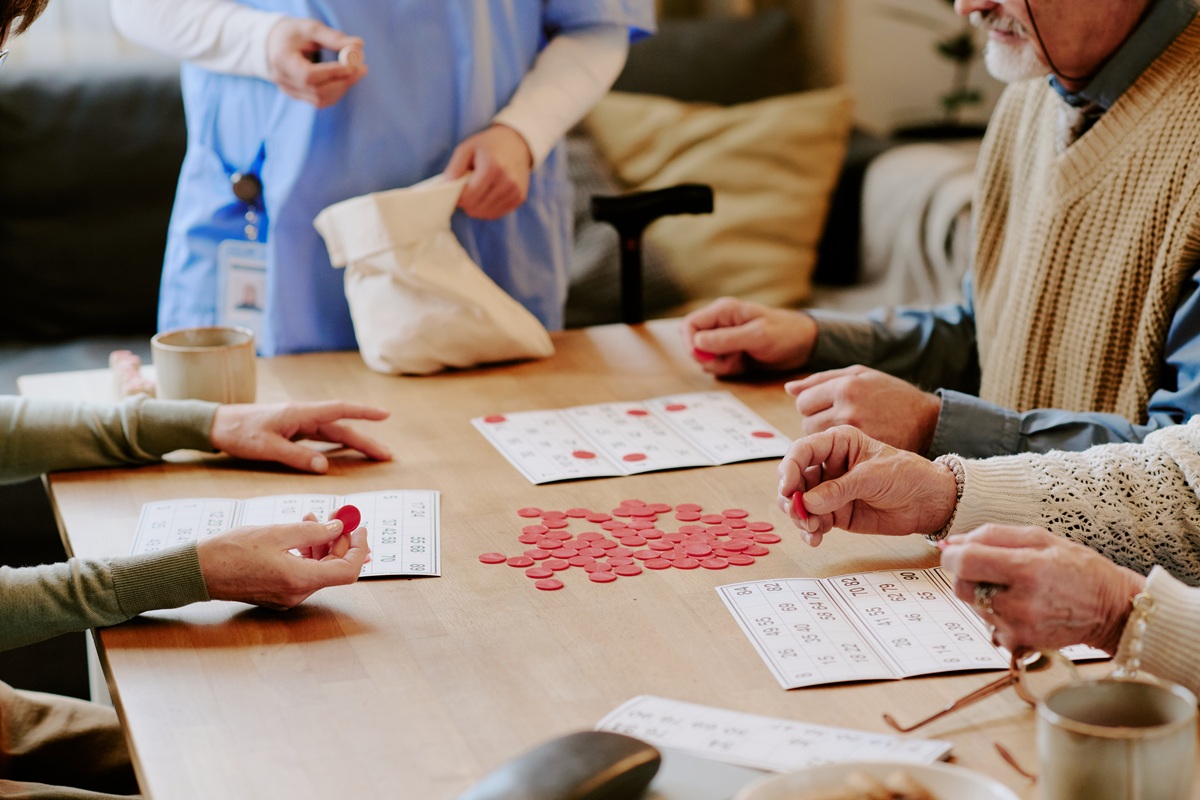
There are several organized structured group activities that memory care communities use to foster togetherness. Communities focus on promoting a natural, predictable rhythm that helps older adults feel safe, reduce feelings of isolation, and combat boredom. At the same time, they help encourage meaningful engagement and connection-building that foster longevity. Scheduled events give residents something to look forward to in their daily lives.
Activities like art, music, or gardening allow seniors to express themselves and connect with peers. These activities allow them to participate without needing strong conversational skills. Singing groups and painting classes tap into their long-term memory. As creative outlets, they help them overcome communication barriers and connect more deeply with peers and staff. Memory care communities also ensure that activities remain personalized so residents can engage without feeling overwhelmed.
Dementia-Friendly Design
Residents get to live in a specially designed community that features familiar layouts, visual cues, and controlled environments. Everything is made to promote a feeling of safety, security, and structure. This helps reduce the chance that residents feel overwhelmed or overstimulated. Specially designed layouts foster intuitive wayfinding, allowing residents to navigate spaces independently and reducing overreliance on staff.
Contrasting colors and special markers again make the entire community navigation-friendly and safe. To encourage everyday socialization, communities have communal spaces like communal kitchens, living rooms, and dining areas near the center of the residence. This allows residents to gather, converse, and participate in daily routines together. Outdoor areas are also designed to be therapeutic and comfortable. Secure garden paths and walking loops allow seniors to wander freely and safely. Benches and activity tables are integrated into the outdoors, allowing residents to come together and engage in activities such as gardening, birdwatching, or group exercise.
Personalized Care Plans
Memory care communities prepare care plans for residents tailored to meet not only their care needs but also their socialization aspirations. The care plans are personalized to each resident’s unique history, background, and remaining abilities. The staff incorporates life-history details, such as past events, to spark natural conversations and foster bonding. The staff shapes “reminiscence” activities based on residents’ past experiences only.
To foster easier, more effective participation, the staff plans socialization opportunities based on a resident’s current abilities. They observe when a resident is most energetic and comfortable, then introduce them to small-group activities. This prevents residents from feeling frustrated or experiencing sensory overload. As part of residents’ care plans, nonverbal social activities such as art therapy, music therapy, or balloon volleyball are incorporated into their daily care practices. This is helpful in cases where verbal communication becomes difficult due to dementia progression. For those who feel more isolated, this personalized care approach is more beneficial, as they are given opportunities such as 10-minute tea times or strolls. This allows them to feel valued and a part of something bigger than themselves.
One-On-One Engagement
One-on-one engagement is a key element of memory care communities, promoting a socially connected atmosphere. This personalized engagement acts as a bridge for residents in memory care. Being part of large groups can be overwhelming for memory care patients; therefore, they are divided into smaller groups. Tailored, individual attention given by the staff helps them feel more connected and safe, which soothes nerves and reduces isolation-driven depression.
Caregivers themselves can sit beside a senior during a small-group activity, helping them participate more comfortably. This proves beneficial for newer residents, as it gives them a supportive anchor into the whole social environment. With one-on-one encouragement, staff can help a resident feel confident enough to support other residents. This gives residents a sense of leadership that, in turn, fosters independence and purpose. The staff also aids residents with similar interests and passions to come together and foster friendships.
Intergenerational Programs
Intergenerational memory care programs focus on connecting seniors with children or young adults. It isn’t just a socialization measure but a comprehensive activity carrying multifaceted benefits for residents. While seniors with dementia may struggle to recall recent events, intergenerational activities are an ideal way to help them recall long-term memories and emotions. Interacting with youth naturally triggers joyful reminiscence about their own younger years, opening doors to effortless conversation.
Engaging in conversation with youth allows seniors to act as their grandparents or mentors. They share wisdom and help children with simple tasks. This provides a deep sense of self-worth and satisfaction, adding meaning to their senior years. The unstructured, natural nature of youth often reminds them of their own younger years. Doing activities like reading groups, puzzle-solving, and gardening together proves to be an ideal mental exercise as well, giving them the dual benefits of cognitive and social engagement.
Serra Sol Memory Care—Memory Care That Promotes Comprehensive Health
At Serra Sol Memory Care, we understand how meaningful regular social interaction is to memory care residents. With numerous social opportunities in place, our community helps residents stay connected, engaged, and supported
Those who are interested in joining a compassionate memory care community can contact us at Serra Sol Memory Care. As a care-oriented community, we focus on promoting holistic support that helps residents live well and thrive. With diverse social programs and events in place, we create a more engaging daily experience for residents.

